
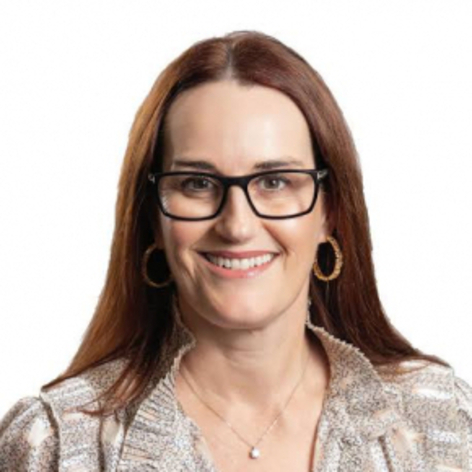
Penny Fielding is Chief Executive Officer of Pearl Home Care Pty Ltd, an Australian-owned home care provider operating under a franchise model across Western Australia, Queensland, South Australia, New South Wales/ACT and Victoria/Tasmania. Under Penny’s leadership, Pearl has grown to 39 locally owned and operated outlets servicing more than 4,000 older Australians, built on the premise that genuine community connection. Prior to this Penny has worked extensively at a senior level in WA Health and NT Health. Penny has a Masters of Primary Health Care, a Masters of Public Administration, and is a GAICD. She is a strong advocate for home care as the sector’s most affordable and most wanted model of ageing in place, and for operating structures that let local providers deliver it sustainably at national scale, and that this can be quality care.
Franchise for the Future: Why Local Ownership Is the Financially Sustainable Answer to Home Care’s National Challenge
Australia’s aged care sector faces a structural tension: older Australians overwhelmingly want to age at home — the Royal Commission into Aged Care Quality and Safety found 80% wish to remain in their own home and 62% prefer home-based care to residential care — yet the sector must deliver this at a cost government and families can sustain. Home care already does this efficiently: government spends roughly half as much per person on home care as on residential care ($2,300 versus $4,600 in 2023–24, per AIHW), and with the population aged 65+ projected to nearly double by 2042, the question is no longer whether home care should be the preferred model, but which operating model can deliver it reliably, locally and at scale.
This presentation poses that the Australian-owned franchise model — a franchisor providing systems, governance and national scale, paired with a network of locally owned and operated outlets — is an underexamined answer to that question. Drawing on Pearl Home Care’s operation of 39 outlets across five states and territories, servicing more than 4,000 clients, the presentation will outline how local franchise ownership converts community connection into commercial resilience: outlets built on neighbourhood, faith, ethnic and club-based networks generate the trust and local knowledge that underpin retention and quality of care, while franchisor-level scale funds compliance, systems and workforce investment that a single independent operator could not sustain alone.
This model is tested against a real stress event: the sector-wide transition to the Support at Home program from November 2025, which exposed system-level failures in claiming, assessment and cross-agency data flows nationally. It shares how Pearl’s locally embedded network surfaced emerging issues early and engaged with client trust at the point of care. The presentation also details the development of a structured set of practical solutions to the provision of sustainable quality care and commercially viable service delivery within this environment.
Delegates will hear about a transferable framework for assessing operating models against financial sustainability and community connection simultaneously, concrete evidence of how local ownership improves early-warning capability during system disruption, and a practical template for converting frontline provider experience into a sustainable home care system.