
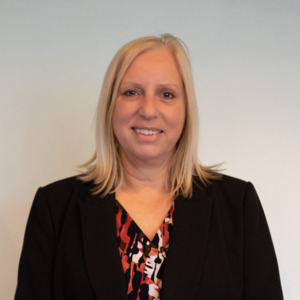
Beverley Sutton is the Chief Executive Officer of Health Education Australia Limited (HEAL) and the Australasian Institute of Clinical Governance (AICG), a division of HEAL.
She commenced her career as a Registered Nurse and Midwife, establishing a strong foundation in clinical risk, quality, and patient safety. She later held research positions at The University of Melbourne and Monash University, further strengthening her evidence-based approach to improving care outcomes.
Beverley’s commitment to healthcare quality and safety was reinforced during her time as a management consultant with Arthur Andersen and Unisys, where she gained extensive experience, in all healthcare sectors, in organisational performance, systems improvement, change management and governance.
She subsequently held executive leadership positions in the public health sector, including Director of Medical Support Services at Northern Health and Director of Clinical Training at Austin Health.
Beverley is a Graduate of the AICD, a Fellow and Certified Health Executive of ACHSM.
Beyond Compliance: The Board’s Role in Governing High-Quality Care
In aged care, boards are navigating increasing regulatory scrutiny, workforce pressures, financial constraints and rising community expectations. Yet one of their most important responsibilities can still be misunderstood: the governance of the quality of care delivered by their organisation.
Clinical governance is sometimes treated as the domain of clinicians, quality teams or management, with boards receiving dashboards, incident reports and compliance data as evidence of oversight. Effective governance requires more. While every member of the workforce has a role in delivering and supporting high-quality care, responsibility for establishing, overseeing and continuously improving the systems through which care is governed rests with governing bodies and executive leaders.
This presentation will explore what this responsibility means in practice for aged care directors and senior leaders, and how boards can move beyond compliance-based oversight towards governance that actively enables high-quality care, organisational learning and improvement.
The presentation will examine five practical areas of board oversight:
Using practical aged care examples and contemporary clinical governance thinking, delegates will be invited to consider the questions boards should be asking, the evidence they should expect, and the behaviours that create stronger accountability without crossing the boundary into operational management.
Delegates will leave with a practical framework for examining their own board’s oversight of clinical governance and three questions to take back to the boardroom: How do we know care is good? How do we know our systems are working? And how do we know we are getting better?