
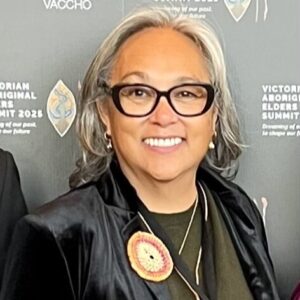
Kim Whiteley is a respected national leader whose expertise and lived experience are deeply grounded in her culture and identity. A proud descendant of the Warramunga Bogan River people, born and raised in Wellington, NSW, Kim brings more than 40 years of leadership across education, health, justice, and land rights — with a strong focus on First Nations strategy, governance, and partnered community engagement.
As Chief Executive Officer of NATSIAACC, Kim brings her deep cross-sector expertise and cultural authority to champion the voices of Elders and Older People, strengthen national advocacy, and influence policy reform. She is committed to ensuring ageing and aged care services are culturally safe, trauma-aware, community-led, and grounded in respect, dignity, and self-determination.
Safer Care: Culturally inclusive and Trauma Informed Care – What It Means, How to Provide It and Why It Matters
Overview:
The session will explore how principles culturally-inclusive care, which includes trauma-informed approaches, provides a practical framework for delivering high-quality, aged care across First Nations, CALD and LGBTIQ+ communities, while recognising the unique experiences of each group.
Subject matter experts in this panel discussion will explore how trauma-informed approaches can strengthen the delivery of safe, inclusive, and culturally responsive aged care. Presenters from LGBTIQ+ Health Australia (LHA), Partners in Culturally Appropriate Care (PICAC), and the National Aboriginal and Torres Strait Islander Ageing and Aged Care Council (NATSIAACC) will examine how understanding the impacts of trauma can improve care experiences and outcomes for LGBTIQ+, culturally and linguistically diverse (CALD), and First Nations older people.
The panel will explore shared principles of safe, inclusive care while recognising that the histories, relationships and responses required are distinct. For First Nations Elders, trauma-informed practice must sit alongside cultural safety, self-determination, kinship, connection to Country and community, and Aboriginal-led approaches.
Drawing on specialist expertise and community perspectives, the panel will highlight practical approaches providers can implement, including communication strategies, culturally responsive engagement, understanding community-specific experiences, workforce capability building, and service design approaches that support safety, trust and belonging.
Rationale:
Varied experiences of disadvantage and discrimination can contribute to trauma across the lifespan and may influence how older people engage with aged care services. A trauma-informed approach acknowledges the impact of these experiences and supports providers to deliver care that promotes safety, trust, choice, collaboration, and empowerment. A trauma-informed approach is but one part of inclusive care. At the same time, inclusive care is not about just recognising diversity, but rather recognising the conditions that help people feel safe enough to engage with care.
Learnings:
Participants will gain practical insights into strategies that support safer, more inclusive care and strengthen providers’ capacity to meet their obligations under the Aged Care Quality Standards. Specific learnings may include:
From a First Nations perspective, practical examples could include taking the time required to build trust before expecting disclosure; recognising how institutional processes can re-trigger previous trauma; and understanding family and kinship involvement.
In better understanding how to implement culturally inclusive care, providers can build quality improvement, enhance workforce capability and deliver safer care outcomes.