
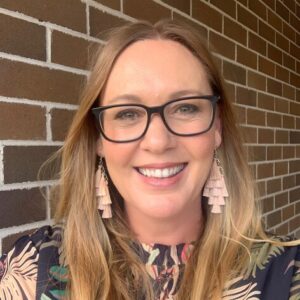
Petrina Greenwood is an innovation, research and emerging technology leader with more than 20 years’ experience across the care and community sectors. Her work focuses on helping organisations turn evidence, partnerships and emerging technologies into practical improvements for customers, employees and communities.
She has extensive experience leading innovation initiatives, responsible AI governance frameworks, research partnerships, evaluation programs and productivity-focused transformation initiatives. Petrina has established collaborations between providers, universities, technology organisations and industry partners to accelerate innovation and strengthen the translation of research into practice. She is currently leading a range of emerging technology initiatives exploring the role of artificial intelligence in improving organisational effectiveness, workforce experience and service delivery.
Petrina is passionate about responsible innovation, research translation and helping organisations navigate complexity while maintaining a strong focus on human outcomes and practical impact.
Beyond Productivity: Using Agentic AI to Reveal Hidden Work in Aged Care
As aged care providers search for productivity gains, most improvement efforts start with a familiar question: how can we automate existing work? But what if the greater opportunity lies in understanding work that organisations do not fully see?
BaptistCare commenced a strategic engagement to better understand the compliance and reporting effort required across a recently merged organisation. While the objective was to develop a comprehensive picture of reporting obligations, the work quickly revealed a broader challenge. Many reporting activities, manual workarounds, duplicate processes and informal practices were not visible through organisational charts, policies or traditional process mapping approaches.
As part of the engagement, an agentic AI-enabled discovery approach was used alongside structured interviews and expert facilitation to engage employees across multiple business areas. Employees participated in guided conversations designed to explore reporting obligations, systems, ownership, effort and process complexity. The approach enabled staff to progressively uncover work that had become normalised and largely invisible over time. In several cases, participants who initially identified only a small number of reporting requirements ultimately revealed extensive hidden workloads, undocumented spreadsheets, reporting dependencies and layers of administrative effort that had not previously been captured.
Traditional approaches to understanding work often rely on workshops, surveys and process mapping. While valuable, these approaches can struggle to uncover how work is actually performed in practice. Through structured AI-enabled conversations, employees were able to reflect on real workflows rather than documented processes. This surfaced examples of ownership distributed across multiple teams, duplicated handling of information, informal reporting processes, workarounds developed to compensate for system limitations, and information flows that crossed multiple teams before reaching a final destination.
A key consideration in the design of the engagement was the opportunity to safely explore the potential of advanced agentic AI. By accessing these capabilities through a professional services engagement, BaptistCare was able to build organisational understanding, assess practical value and identify future opportunities without the complexity, investment and governance challenges associated with an enterprise-scale AI implementation. This enabled the organisation to learn quickly, generate evidence and inform future decisions regarding AI adoption and capability development.
While the engagement was initially focused on compliance reporting, the findings revealed broader insights about organisational complexity, administrative burden and workforce effort. Hidden work frequently emerged at the boundaries between teams, systems and governance structures, creating a richer understanding of how effort is consumed across the organisation. These insights provided a stronger evidence base for identifying productivity and transformation opportunities than traditional process review methods alone.
This presentation will share the organisational challenge that prompted the engagement, the discovery methodology used, the patterns of hidden work revealed through workforce engagement, and the practical lessons for organisations seeking to better understand administrative burden, compliance complexity and productivity opportunities.
Attendees will leave with practical ideas for using agentic AI as a tool for organisational discovery, helping organisations identify hidden administrative burden, surface opportunities for improvement and build a stronger evidence base for future productivity and transformation initiatives. Before organisations can transform work, they must first understand the work they are actually doing.