
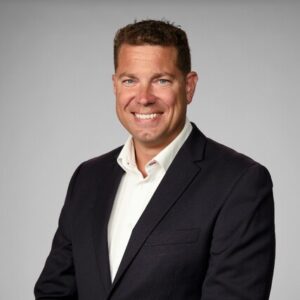
Steve Iannuzzelli is Chief Commercial Officer at IT Integrity and a highly regarded business leader with more than 20 years of experience spanning technology, operations, commercial growth, and business transformation. Steve helps organisations translate strategy into practical, measurable outcomes. He is passionate about working with aged care providers to strengthen digital capability, improve service delivery, and navigate complex change with confidence. Known for his authentic, people-first leadership style, Steve brings a unique ability to connect technology, business objectives, and organisational culture, empowering leaders and teams to embrace innovation, build resilience, and deliver better outcomes for the communities they serve.
Closing the Security Gap: Bringing Cyber, Operational and Physical Security Together in Aged Care
Cybersecurity in aged care no longer stops at the network, the endpoint or the clinical system.
Today’s care environments are increasingly connected. Access control, CCTV, nurse call systems, building and environmental controls, medical devices, sensors, smart devices and other operational technology all form part of the digital environment organisations depend on every day.
Yet cyber, operational and physical security are still often managed separately.
That separation can create significant blind spots. A connected device may sit outside traditional IT management. An operational system may have limited patching options or depend on third-party remote access. Physical security technology may collect increasingly valuable data while introducing new questions around identity, privacy, governance and access.
As these environments converge, aged care providers need a more joined-up approach to understanding and managing risk.
This session will explore how organisations can close the gap between cyber, operational and physical security, beginning with visibility: understanding what is connected, who owns it, what it communicates with and how critical it is to the delivery of care and operations.
From there, attendees will learn practical approaches to mapping connectivity and trust, strengthening identity and remote access controls, segmenting higher-risk systems, improving monitoring, managing third-party access and developing response plans that account for operational continuity as well as cybersecurity.
The session will also consider the growing role of AI-enabled cameras, sensors and physical security platforms. These technologies can support earlier detection and faster response, but they also require appropriate governance, privacy controls and integration with the organisation’s broader security strategy.
Attendees will leave with a practical framework for understanding their cyber-physical attack surface and bringing technology, security, operations and facilities teams together around a shared objective: protecting not only organisational data, but the connected systems and environments that keep aged care services safe, available and functioning.