
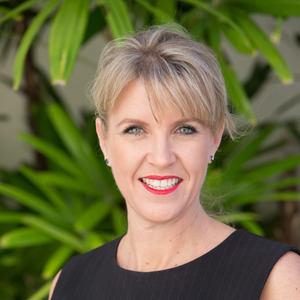
Sue Boisen is a Registered Nurse, senior health service executive and experienced aged care governance leader. In 2009, she co-founded Top End Nurses, now CareLynx, to address gaps in clinical leadership and continuity of care. Sue has held senior executive and governance roles across residential aged care, home and community care, and regional and remote services. Her current work includes national clinical-governance and provider-assurance oversight across multiple home care services, as well as non-executive and clinical advisory roles. She has supported providers responding to regulatory risk, workforce instability, service redesign and major aged care reform. Sue brings practical expertise in clinical governance, quality and risk systems, documentation, clinical escalation, care coordination, palliative care and governing-body assurance. She is a Graduate of the Australian Institute of Company Directors and is committed to making clinical governance practical, proportionate and meaningful for older people.
Registered Nurse
Certificate in Clinical Education
From Assumption to Assurance: Closing the Clinical Governance Gap in Home Care
“With Commission visits under the new standards now underway, this is a live, urgent gap not a theoretical one. Providers need this insight now, not after their first non-compliance notice.” Sue Boisen.
The strengthened Aged Care Quality Standards have materially changed the clinical governance expectations applying to home care. This session examines what effective clinical governance looks like in practice and how providers can demonstrate that it operates consistently across their services. Drawing on extensive sector experience and de-identified examples from provider-assurance work, Sue Boisen will explore recurring vulnerabilities in clinical-risk identification, documentation, escalation, monitoring and governing-body reporting – and provide a practical framework that providers can immediately apply.
Problem statement:
Many home care providers continue to associate clinical governance primarily with the direct delivery of nursing or allied-health services. However, clinical risks exist across the participant population, including where clinical care is limited, declined, externally delivered or not yet recognised. Incomplete health information, unrecognised deterioration, repeated falls, medication risks, refusal of clinical review and fragmented oversight can leave older people exposed to avoidable harm. Providers may have policies and committed staff yet still be unable to demonstrate that clinical risk is consistently identified, managed and reported.
Core argument:
The central gap is not necessarily one of care intent – it is a gap between assumption and assurance. Good intentions and individual clinical activity are not, by themselves, evidence of effective clinical governance. Providers need connected systems that make clinical risk, accountability, escalation, follow-up and outcomes visible from the participant record through to clinical leaders and the governing body. Clinical governance must operate continuously, rather than being assembled in preparation for an audit or Commission visit.
What the session delivers:
Using practical home care examples, the session will show how apparent administrative deficiencies can conceal significant clinical risk. Participants will be introduced to a clinical governance readiness framework based on four assurance questions:
The framework supports proportionate, sustainable governance without over-resourcing or over-engineering compliance systems.